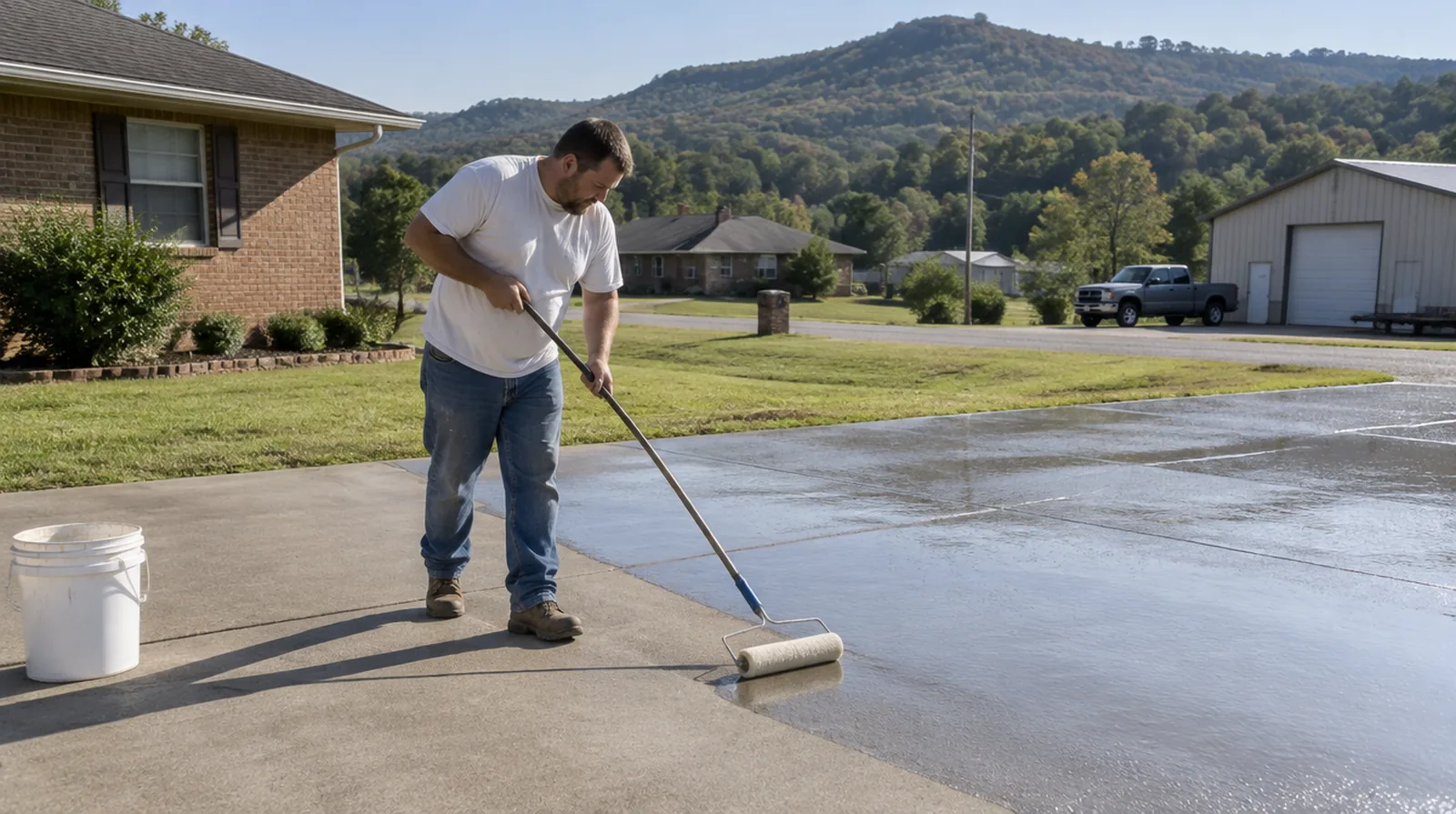
What kind of sealer do you use?
Penetrating sealers soak in and keep a natural look. Topical sealers sit on top and add a little sheen. We recommend one based on how the area is used and how much sun and shade it gets.
Why seal here?
Humid summers and shady yards mean porches and patios grow mildew, and red clay stains bare concrete fast. The EPA guide to mold and moisture explains why damp concrete near the house is worth addressing.
Sealer or coating?
Sealing is the lighter, cheaper step. For color and a fully sealed garage, look at a garage coating.
What does Poteau weather do to bare concrete?
Spring storms roll through the Poteau River valley, summers are humid, and winter ice storms bring freeze-thaw cycles and salt. Water soaks into bare concrete, freezes and pops off small flakes; red clay and leaves stain the surface. Concrete sealing in Poteau keeps water and stains near the top of the slab where they can be washed off.
Which surfaces get sealed most often?
Driveways off county roads, front walks, porches, patios, shop aprons, barn aisles and wash pads. Lake properties near Wister also call us for slabs around boathouses and outdoor kitchens.
How do you prepare the slab?
We pressure wash, degrease oil spots, treat mildew in shaded areas and wait for the concrete to dry completely. In humid weeks that may take longer. Sealing damp or dirty concrete leaves a cloudy finish, so we do not rush it.
How often should it be resealed?
Penetrating sealers last several years on most slabs; film sealers under cover need refreshing sooner. We tell you which you have and what to expect.
When is the best time?
Spring and fall during dry spells between fronts.
Will sealer help with salt from ice storms?
Yes. Salt draws water into bare concrete and speeds up flaking. A sealed slab keeps most of that brine on the surface where it can be rinsed off. Sand or a gentler deicer is easier on concrete than rock salt, and we are happy to talk through options.
Does sealer make concrete slick?
Penetrating sealers do not change texture at all.
Sealing carport pads at manufactured homes
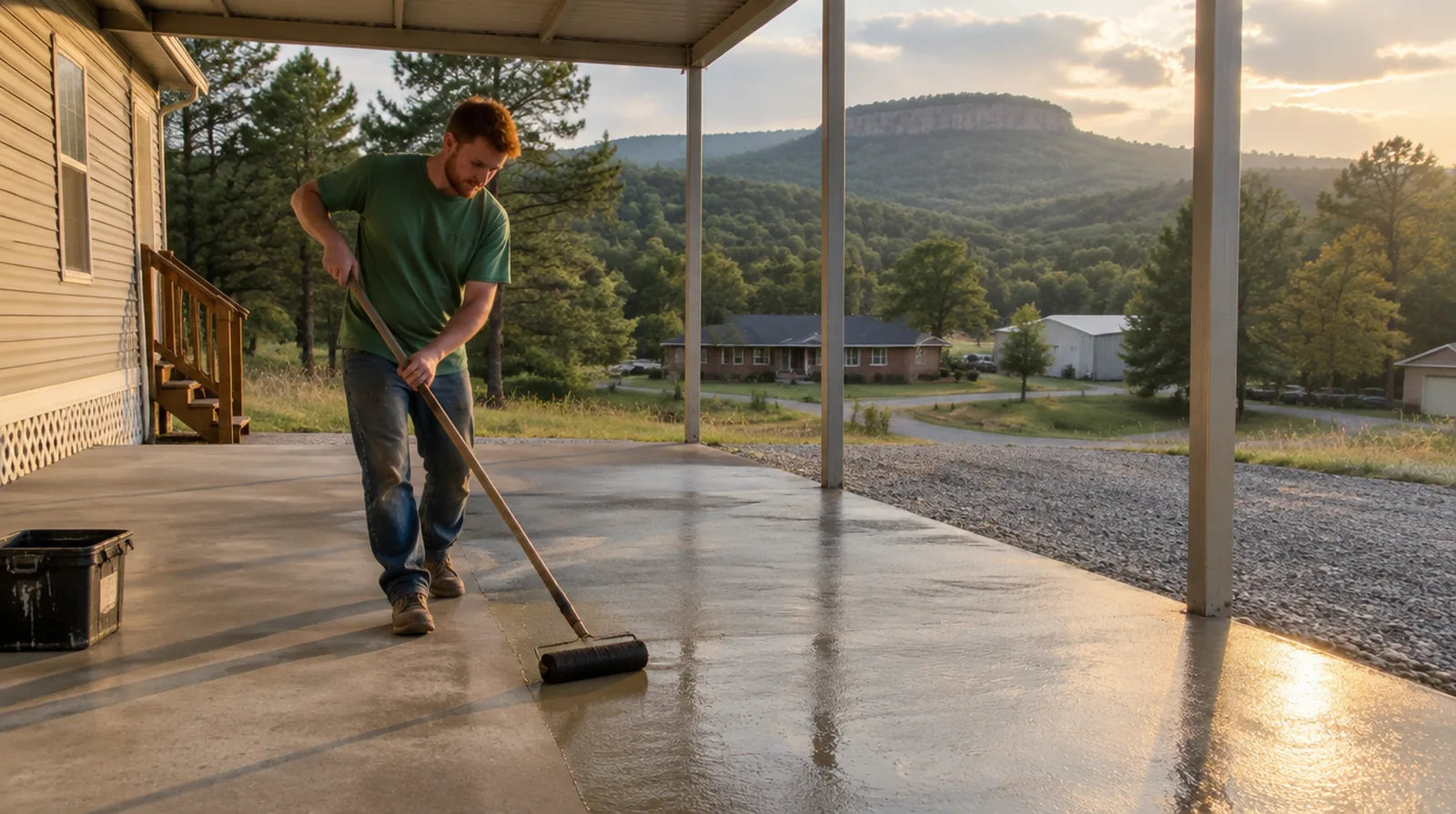
Plenty of homes around Poteau and the rest of LeFlore County are manufactured homes on country lots, with a concrete carport pad or patio beside the house. Those pads take sun, rain and red dirt with no garage door to protect them. A penetrating sealer helps keep water out of the surface and makes dirt and leaves easier to rinse away. The photo shows a worker sealing a carport pad beside a manufactured home, with pine trees and a gravel drive next to it.
Carport pads often have oil stains from years of parking. We treat those before sealing so the sealer soaks in evenly instead of beading on top of the stains.
Carport sealing steps
- Wash the pad and treat oil spots.
- Let it dry fully.
- Apply a penetrating sealer.
- Keep vehicles off until it sets.
Carport sealing questions
Do you seal the steps and walkway too?
We can, and it is often a good idea while we are there.
How often should a carport pad be resealed?
Every few years, depending on sun and traffic. A water bead test shows when it is time.
Why carport pads need extra care here
Poteau gets heavy rain in spring and fall, hot sun in summer and some ice in winter. An uncovered or partly covered pad takes all of that. Water soaks in, freezes on cold nights and starts small surface flakes, especially near the edges. Sealer slows that down. It also helps with mildew and green staining on shaded pads under pine trees, which is common on wooded lots. We can treat those spots with a cleaner before sealing so the pad starts off fresh. Most carport pads, steps and walkways can be done in a single visit.
Want your concrete sealed?
Call (918) 201-9962 or use the form to set up a free estimate on your floor.