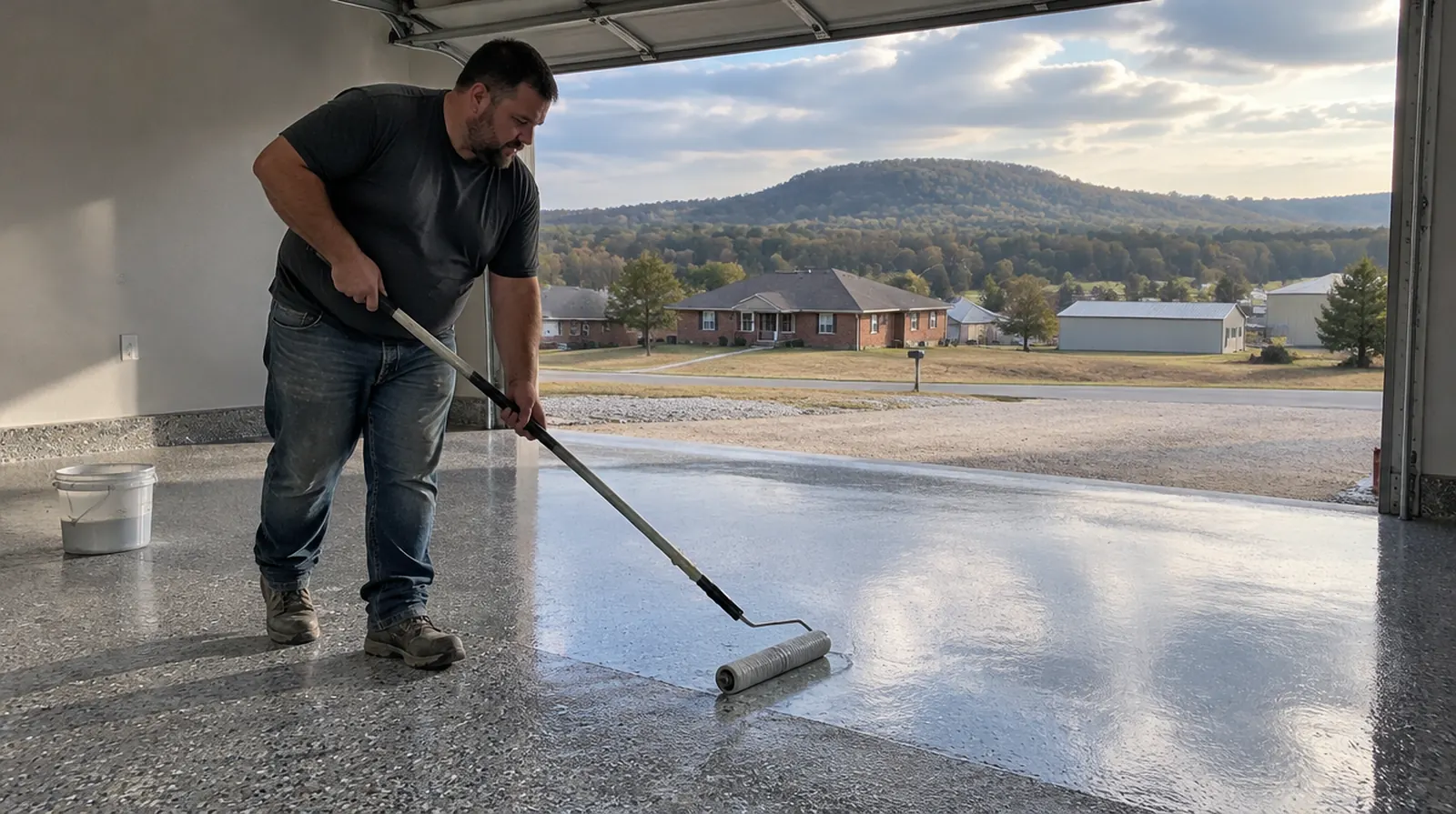
Why choose polyaspartic?
- It cures fast, which helps when spring storms leave short windows.
- It does not yellow in sun, good for garages that sit open and for porches.
- It can go down in cooler weather than standard epoxy.
It costs more than a standard epoxy system, and the crew has to work quickly in small sections.
Can it fix a bad floor?
Once we grind off whatever is failing, yes. See our repair page for how we handle peeling coatings.
Polyaspartic questions
When can I park?
Often the next day. We give you the exact time for your product.
Why does polyaspartic suit Poteau garages?
Polyaspartic floor coating in Poteau cures fast, so many garages are finished in one day. It stays clear in sun, handles hot tires and resists most fuels and road salt. It also cures in cooler weather than many epoxies, which helps for installs late in the fall.
What happens on install day?
We grind and repair the slab, vacuum and roll a base with flake. After a short cure we scrape loose chips and roll the clear top. Most crews finish by mid-afternoon.
Is it more expensive?
The material costs more, but the shorter install can balance it out.
Does humidity matter?
Yes. We check humidity and dew point before starting.
Can it go on a covered porch?
Yes, with grit added for footing.
How soon can I drive on it?
Often the next day, depending on temperature. We give you an exact time before we leave.
Can it handle a heavy work truck?
Yes, especially with an epoxy base for extra build under the polyaspartic top. That hybrid adds impact resistance in shops and garages that see loaded trucks and trailers every day.
How do I care for it?
Rinse off clay and salt, mop with mild soap and wipe up spills promptly.
Can it go over an old coating?
Only if the old coating is well bonded. Otherwise we grind it off first so the new floor grips bare concrete.
Which colors are available?
Tinted bases with flake in earth tones, grays and mixed blends.
Fitting the job between spring storms
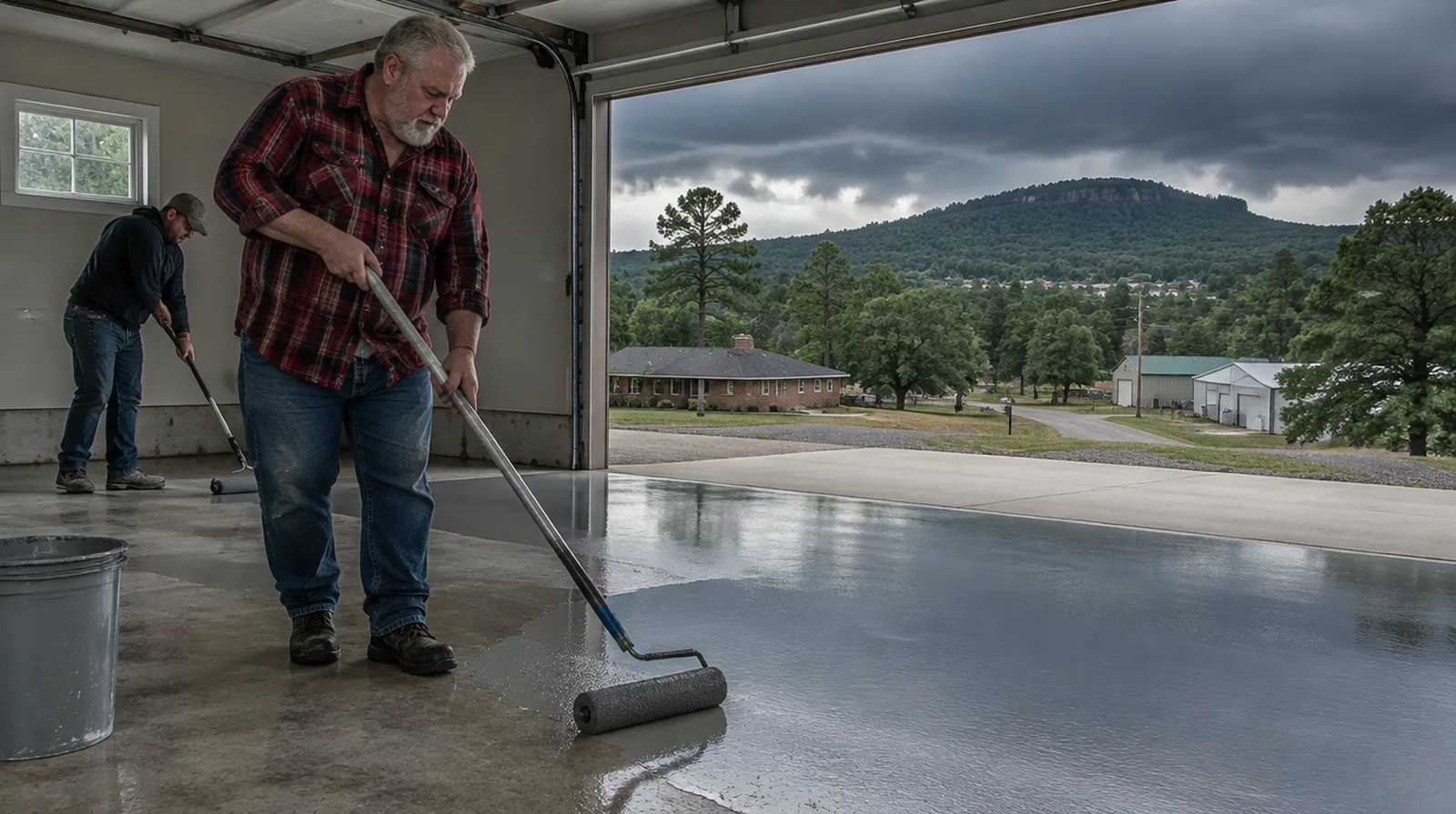
Spring weather in eastern Oklahoma can change by the hour. A clear morning can turn into dark clouds over the ridge by early afternoon, like in the photo, where two installers are rolling the top coat while a storm builds outside. Polyaspartic helps in this kind of weather because it sets in hours instead of a day or more. We can watch the forecast, pick a dry window, and get the floor done before the rain comes.
We still respect the weather. If humidity is too high or a storm is on top of us, we wait. High moisture in the air can cloud the finish or shorten working time too much.
How we time a storm-season install
- Watch hourly forecasts the day before and the morning of.
- Start early to get the base coat down in the coolest, driest part of the day.
- Close the garage door before rain to keep humidity down.
- Move the date if conditions are not right instead of forcing it.
Storm-season coating questions
What if it rains halfway through?
Light rain outside is not a problem with the door closed. Heavy humidity pushing into the garage is what we watch for.
Can lightning or power loss ruin the job?
Our coatings do not depend on power once applied. Grinding does, so we plan grinding early.
How soon can I park after a one-day install?
Usually the next day. We write down the exact time for your floor.
Fall and winter work in Poteau
Storm season is not the only time to coat. Fall usually has drier air and cooler slabs, which make for easy installs. In winter, polyaspartic can still cure on cool days when epoxy would struggle, so long as the slab temperature is high enough. We check it with a thermometer on the morning of the job.
Need the garage back quickly?
Call (918) 201-9962 or use the form to set up a free estimate on your floor.