Two ways to get an epoxy counter
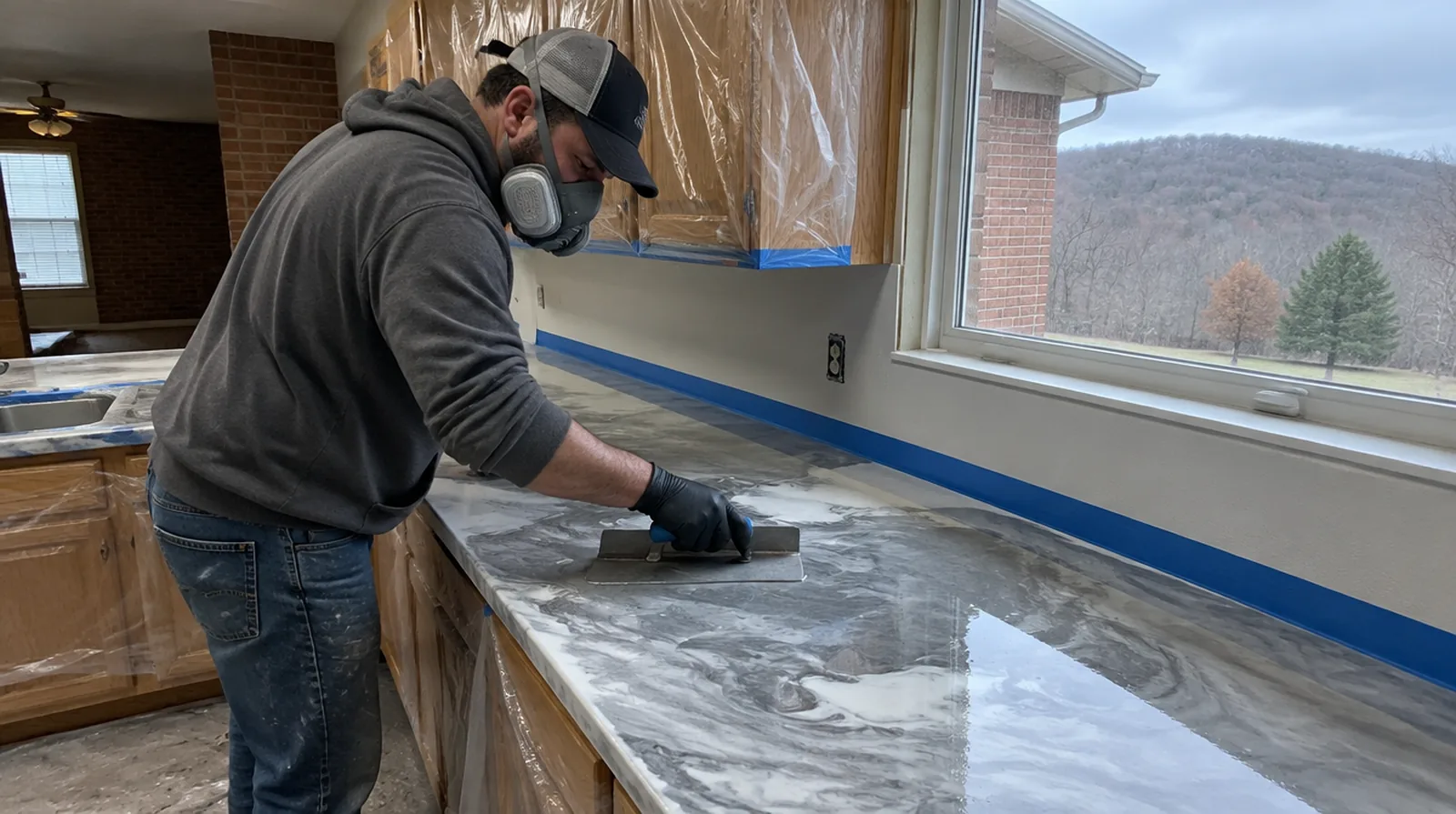
Resurfacing. We coat your existing laminate, tile or cultured marble with a new stone-look or solid surface. Nothing gets torn out, and the kitchen is usable again in a few days. This is the most common job in town, where many brick and frame homes from the 1960s through the 1990s still have their original counters.
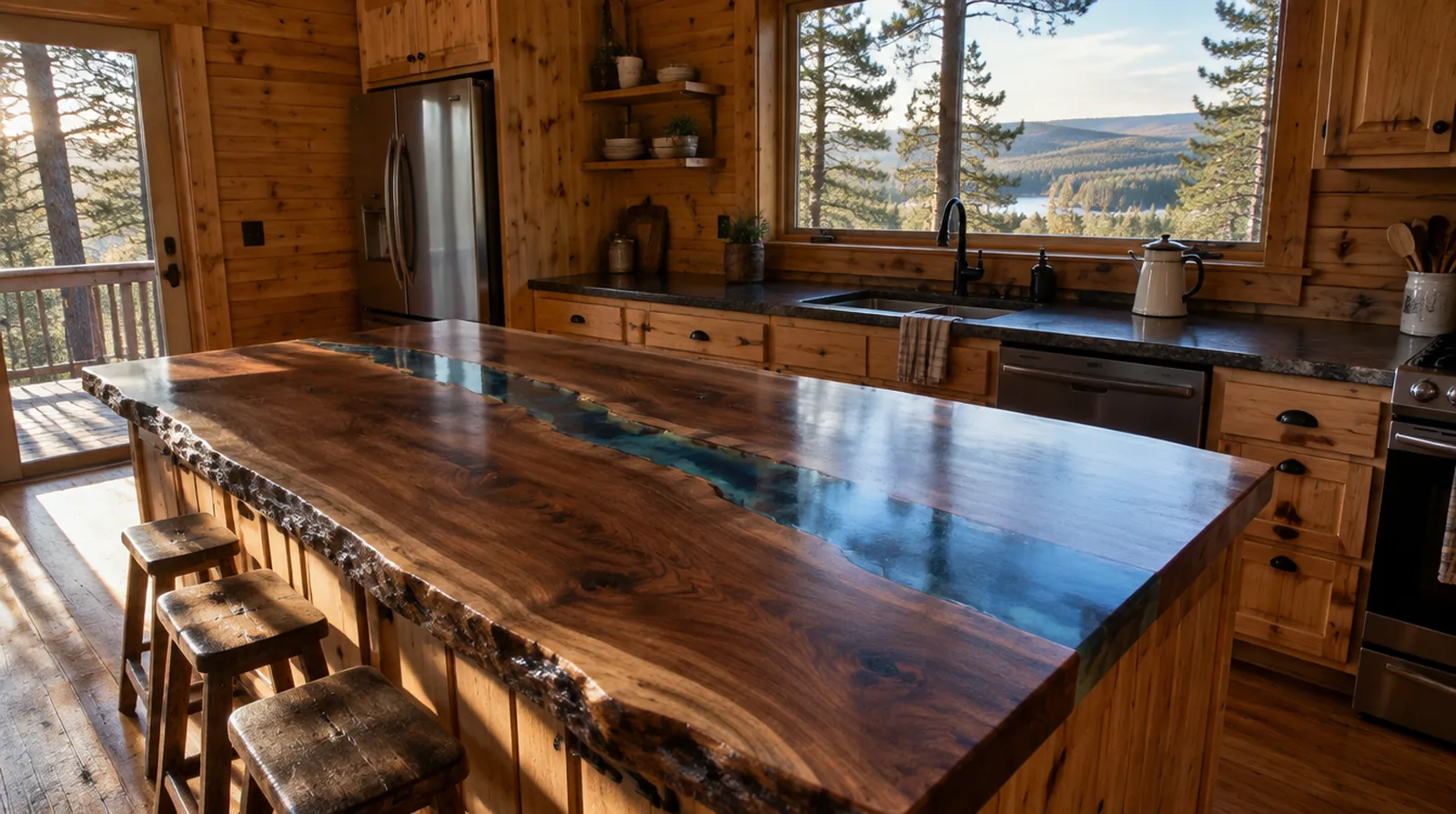
Wood and live-edge tops. Southeastern Oklahoma has a strong woodworking tradition, and plenty of people here have cedar, walnut, oak or pecan slabs from their own land or a local sawmill. We build those into counters and islands, fill cracks and knots with epoxy, and pour river designs where two live edges meet. Then we finish the whole top with a clear epoxy coat, rated for food contact once fully cured, that protects the wood.
Cabins, lake houses and rentals
Poteau sits in the hills of Le Flore County, under Cavanal Hill, and Lake Wister State Park is only about eight miles south. Cabins and weekend places around the lake and back in the Ouachita foothills are some of our favorite projects. Epoxy holds up to wet swimsuits, fishing gear and lots of guests. For cabins rented out on a nightly basis, it is a durable surface that cleans quickly between stays.
We also coat counters in rental homes near Carl Albert State College, where landlords need surfaces that are tough and easy to repair.
Older homes in town
In town, many houses near downtown and around the college are older brick and frame homes with original kitchens. Counters there are often laminate with a rolled front edge, or small square tile set decades ago. Both can be coated. Rolled edges get sanded and primed so the epoxy wraps the curve, and tile gets its grout lines filled flat first.
We also check what is underneath before we pour. Particleboard under an old sink often swells from slow leaks, and a coating will not fix soft wood. If we find it, we tell you and price the repair separately so there are no surprises. Warm stone patterns and soft whites with gray veining tend to suit the oak and painted cabinets in these kitchens.
Designs
- River tables and islands with clear, blue, green or black epoxy rivers
- Granite looks in gray, black and brown for traditional kitchens
- White marble to brighten a dark cabin kitchen
- Metallic swirls for bars and game rooms
- Embedded items like arrowheads, coins or fishing flies under a clear coat
Humidity, cold and wood movement
Poteau gets hot, humid summers and cold snaps in winter. Both affect the pour. High humidity can cloud the finish, so we control the room with air conditioning or a dehumidifier. In cabins that are not heated full-time, the room must be kept warm, ideally around 70 degrees, through the full cure.
Wood is a separate concern. A slab that is not dry enough will keep moving after it is finished and can crack the epoxy. We check moisture content with a meter before we pour. If your slab is still too wet, we will tell you rather than pour it and hope.
The process
- Visit to look at the counters or slabs, take measurements and plan the design.
- Protect the room, then sand, repair and prime existing tops, or flatten and seal wood slabs.
- Pour the design layers and river fills.
- Apply a final clear coat.
- Allow a day or two before light use and about a week before full use. Thick river pours take longer.
Everyday care
Clean with mild soap and water, use cutting boards and set hot pots on trivets. Over the years, the clear coat can be sanded and refreshed to look new again.
Coating a shop floor too? Ask about our colored chip floors or one-day polyaspartic coatings.
Ask about your countertop project
Call (918) 201-9962. Tell us whether you are resurfacing or building new, and we will set up a visit and give you a written price.